October 2025
Hearing loss and brain health research highlighted at USC
USC featured TAN Lab work examining how hearing loss may contribute to cognitive decline and how earlier intervention could support brain health.
Read lab news →The TAN Lab studies the sensory, neural, and cognitive mechanisms of speech perception—especially in people with hearing loss and cochlear implants—to advance more precise, personalized hearing care.
Why do people with similar hearing loss experience very different speech-understanding outcomes?
How do sensory and cognitive systems interact when listening becomes difficult?
Can hearing technology and individualized intervention protect communication and brain health?
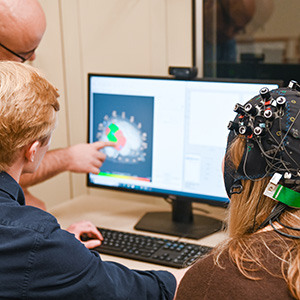
We combine auditory psychophysics, speech perception, signal processing, and neuroimaging to understand individual differences—and translate that knowledge into better assessment and intervention.
Understanding how hearing, cognitive resources, and listening demands interact in complex communication environments.
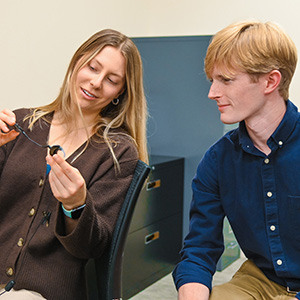
Studying spectral resolution, electrode-neuron interactions, and perceptual variability to improve CI outcomes and programming.
Examining pathways linking age-related hearing loss with cognitive decline, psychosocial health, brain aging, and dementia risk.
Using fNIRS, MRI, EEG, behavioral methods, and computational tools to study sensory and neural mechanisms of communication.
Our work begins with a simple clinical reality: people with similar hearing thresholds or similar devices can have dramatically different communication outcomes.
We study the mechanisms behind that variability so that hearing care can move beyond one-size-fits-all measures toward person-specific assessment, prediction, and treatment.
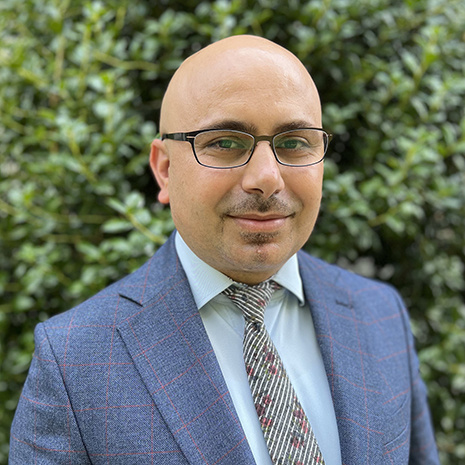
Dr. Arjmandi directs the Translational Auditory Neuroscience Lab in the Department of Communication Sciences and Disorders at the University of South Carolina. His research integrates auditory neuroscience, speech perception, biomedical engineering, and neuroimaging to understand and improve communication outcomes in people with hearing loss.
The independent site will become the living record of TAN Lab publications, presentations, student accomplishments, grants, and community impact.
USC featured TAN Lab work examining how hearing loss may contribute to cognitive decline and how earlier intervention could support brain health.
Read lab news →Doctoral student Samin Ashjaei presented work on regional brain atrophy and word recognition in noise among older adults.
TAN Lab students completed honors theses spanning hearing, cognition, speech, and communication.
Collaborative TAN Lab work received Visionary Session and Meritorious Poster recognition.
We welcome research participants and inquiries from undergraduate and graduate students, clinicians, engineers, neuroscientists, and collaborators interested in hearing, cochlear implants, cognition, and brain health.
Ways to work with us →